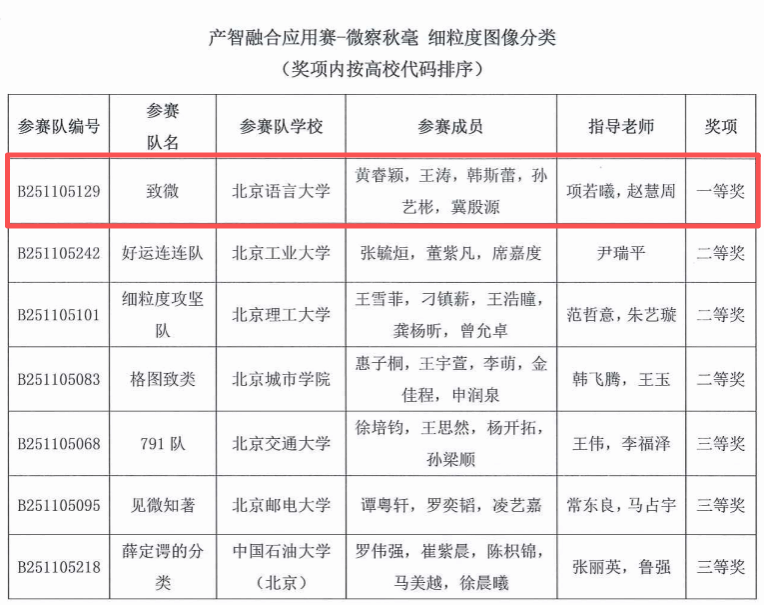
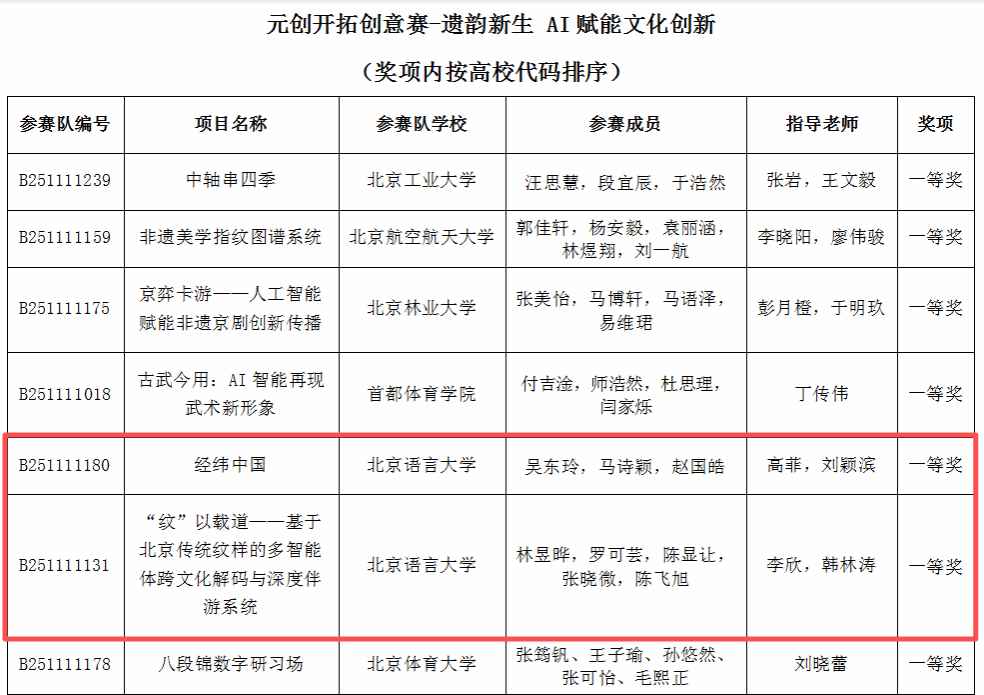
BEIJING, Jan. 2026 — Three teams from Beijing Language and Culture University (BLCU) secured first prizes in two tracks of the inaugural Beijing College Students’ “AI+” Innovation Competition, the Beijing Municipal Education Commission announced recently. The award-winning projects demonstrated excellence in “Industry-AI Integration Application” and “Meta Innovation and Pioneering”, placing BLCU among the top-performing universities and showcasing the institution's educational effectiveness and student innovation.
Project Highlights:
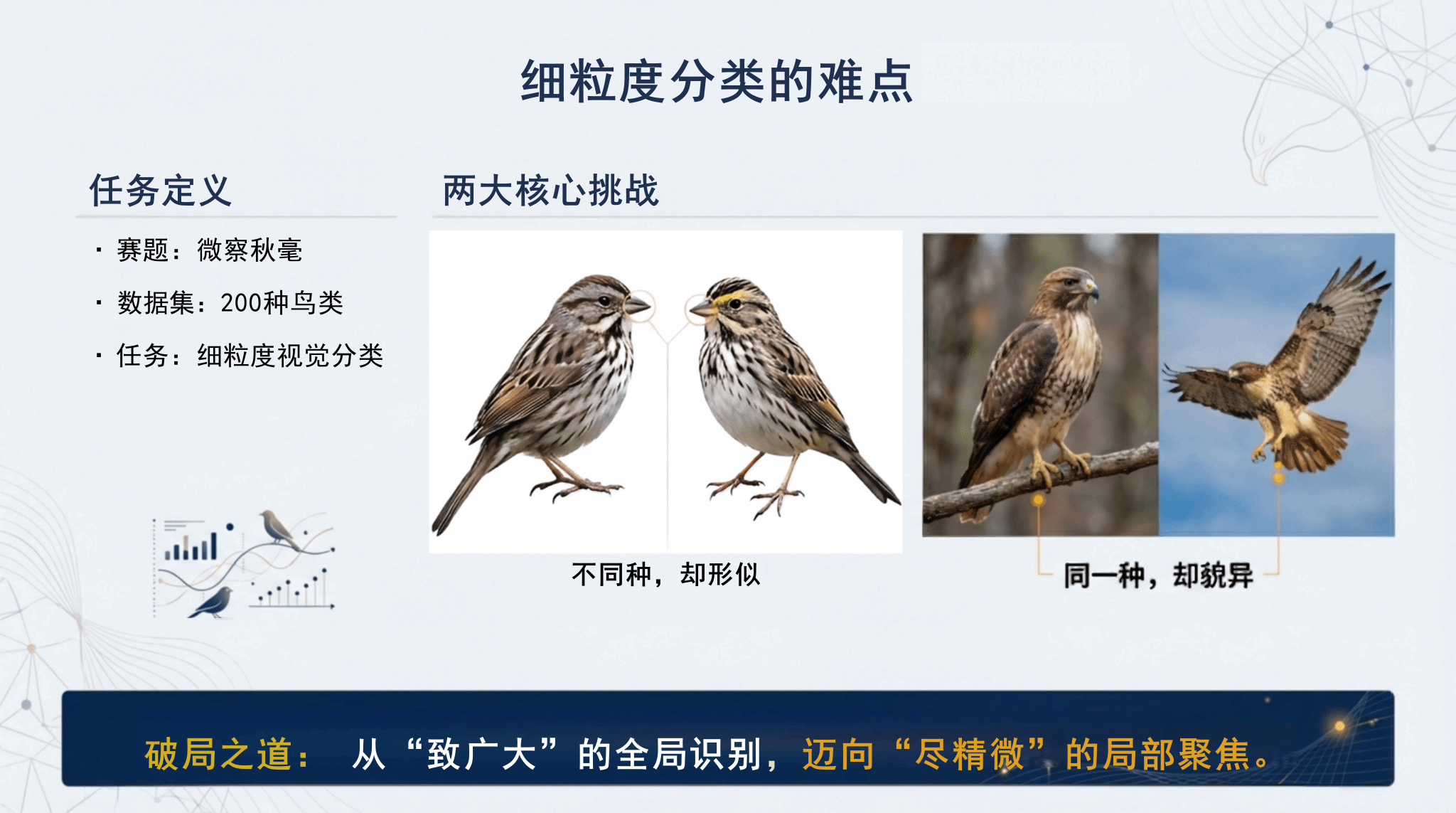
1. Zhiwei (UltraFine): This project, focused on fine-grained image classification, tackles the challenge of fine-grained bird species recognition where differences between categories are subtle and backgrounds are complex, by developing a dual-stream architecture that employs weakly-supervised key part mining technology to automatically identify distinctive visual features. Without manual annotation, it accurately identifies distinctive features like beaks and wings, overcoming long-tail distribution problems and reinforcing its generalization capability through Mixup augmentation and two-stage training. The project achieves both high precision and interpretability, successfully transitioning from algorithm development to real-world ecological monitoring, embodying the philosophy of “reaching both the broad and the minute.”
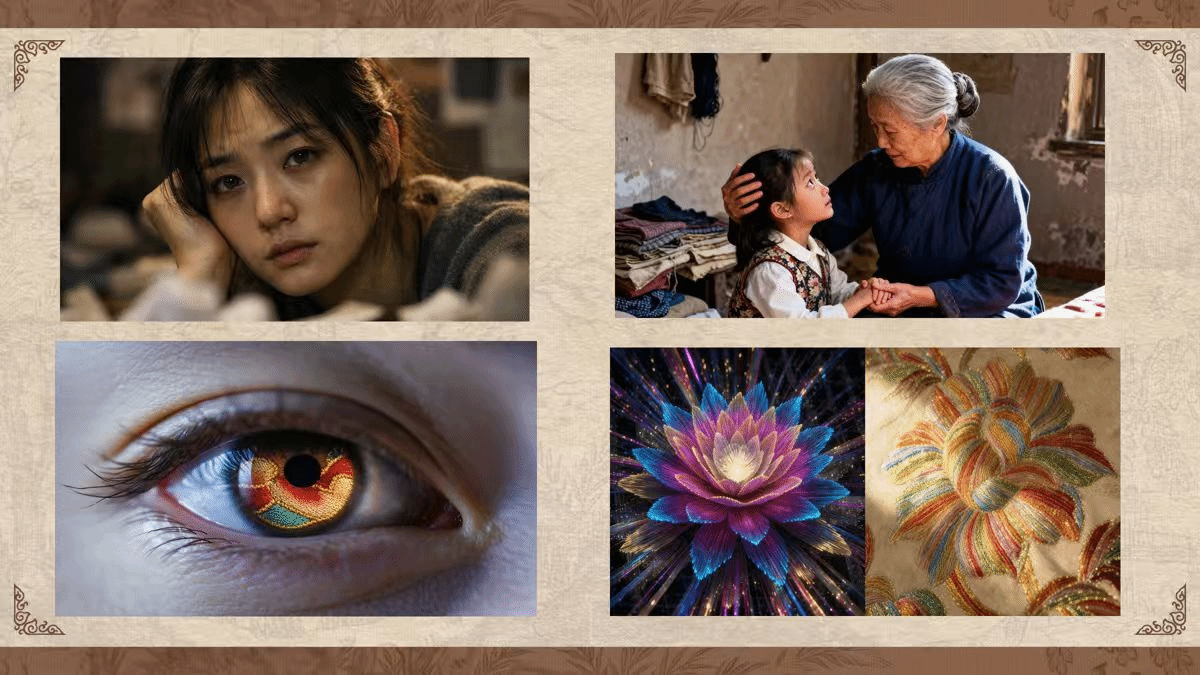
2. Warp & Weft of China: The team innovatively leverages AI to extract, parse, and evolve patterns from the Han Dynasty brocade arm guard inscribed with “Five Stars Rise in the East to Benefit China.” Through “golden thread” imagery related to the desert frontier, ancient workshops, generational skill inheritance and contemporary design, the project transforms static patterns into flowing cultural symbols. While focusing on the creative reinterpretation of traditional motifs, it also reveals a spiritual core: “severed threads can be rejoined, scattered patterns can be reordered.” AI serves not merely as a technological medium but as a driving force to revitalize ancient wisdom and promote cross-boundary regeneration of patterns and narrative innovation.
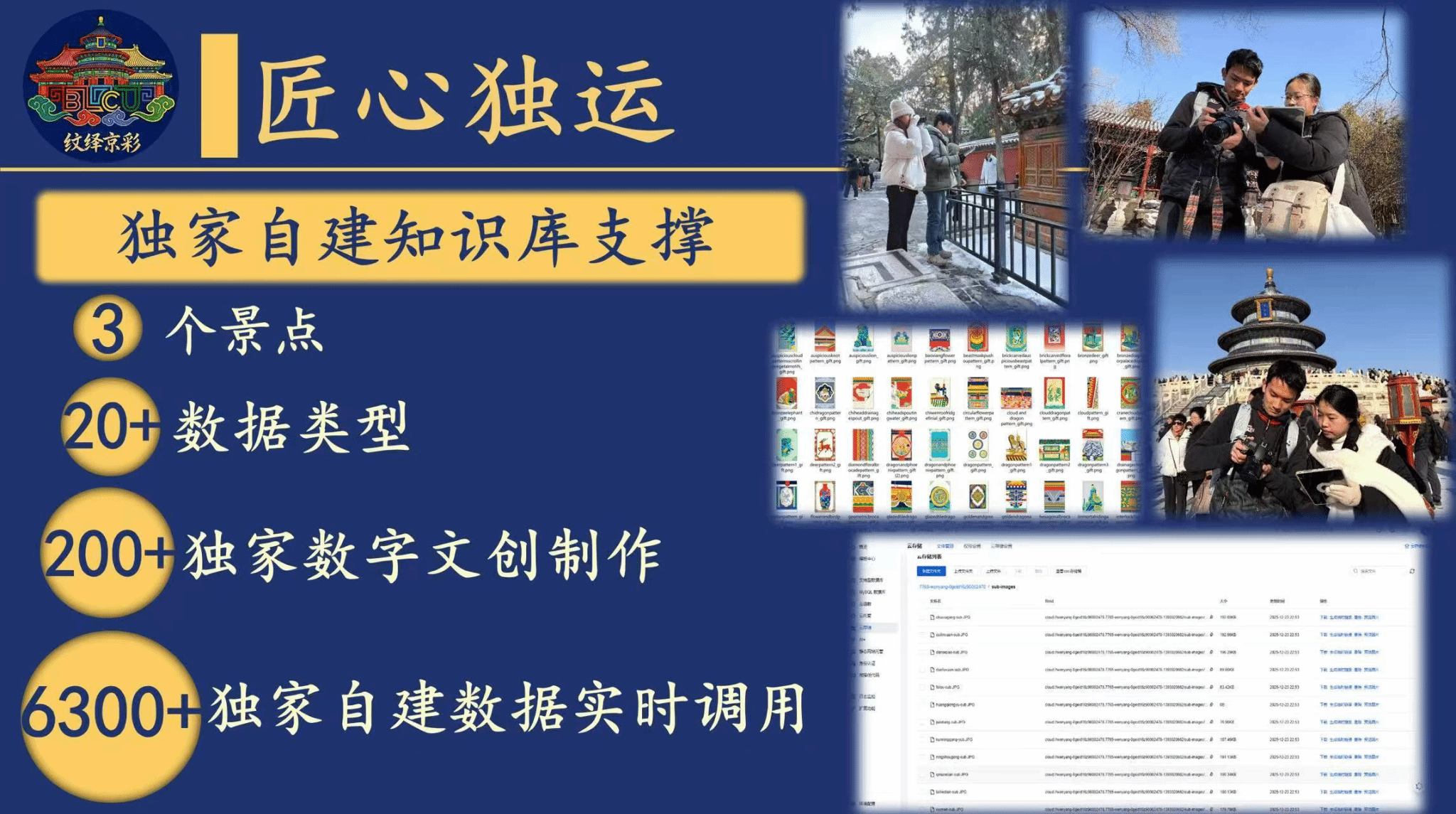
3. The “Wen Yi Jingcai (Patterns as Vehicle of Truth)” team developed a multi-agent tour companion system that integrates pattern photography, cultural interpretation, and digital preservation. This system decodes architectural patterns in real-time through image recognition and AI dialogue, generating personalized digital souvenirs via AIGC technology. It creates a complete experience with the integration of a cultural heritage map, community co-creation, and gamified exploration, aimed at bridging cultural understanding gaps between Chinese and international visitors while promoting innovative development and cross-cultural dissemination of cultural heritage.
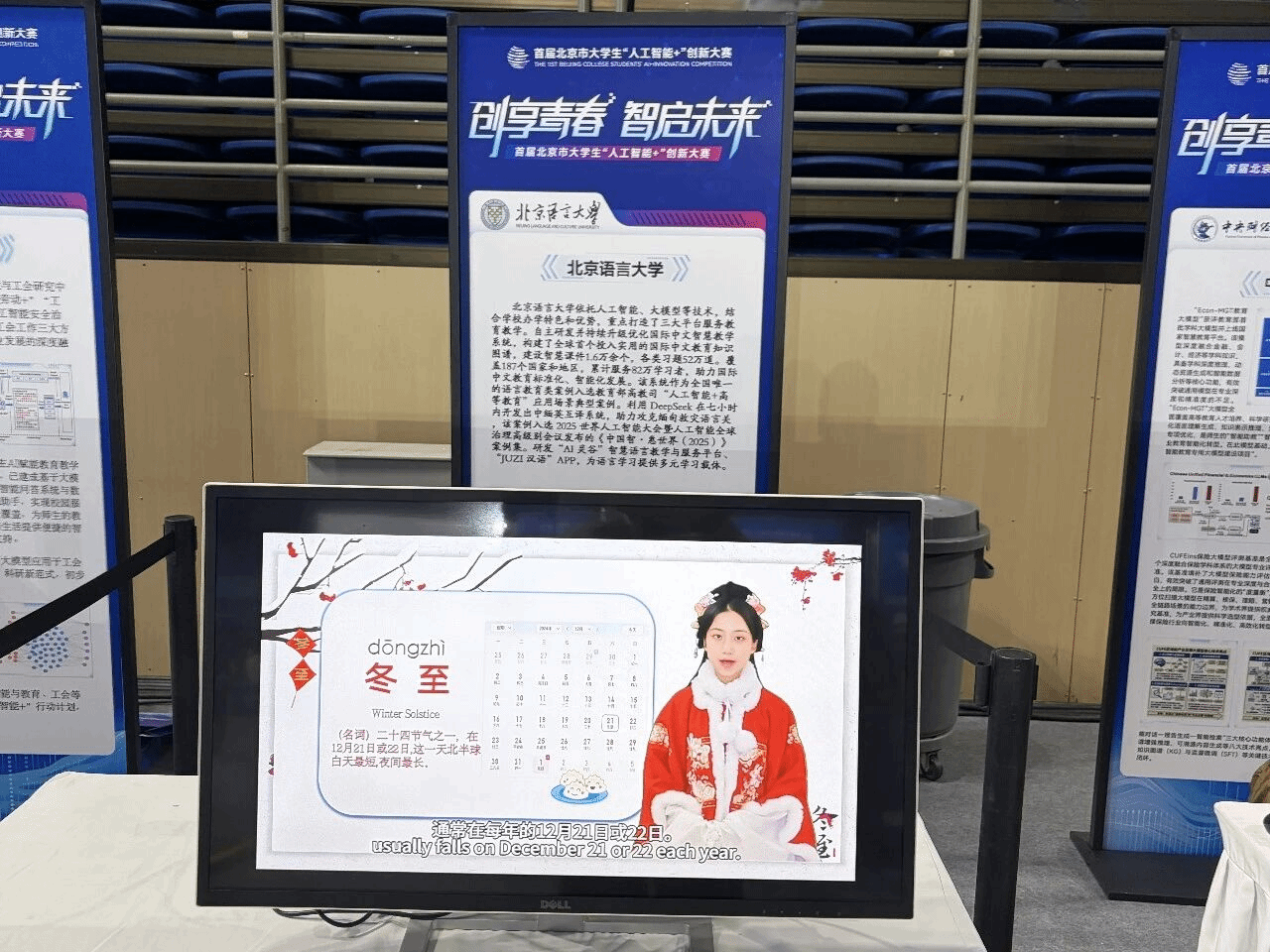
The competition, themed “Innovative Youth, Intelligent Future”, attracted 11,000 registrants from universities and colleges in Beijing, with 222 teams from 55 institutions advancing to the municipal finals. At BLCU, nearly 200 students participated in campus selection, with teams refining their proposals under faculty guidance on aspects such as technical solutions and application prospects. An expert panel selected three projects centering on fine-grained image classification and AI-powered cultural innovation to advance to the finals. These projects developed solutions with tangible application value and drew significant attention from university faculty, students, corporate technology representatives, and investors at the event.
These achievements manifest BLCU’s commitment to “AI+” educational reform. The university has integrated AI development into its top-level strategy, launching multi-dimensional initiatives to implement the national education digitalization strategy. Furthermore, BLCU is planning to continue promoting deep integration between AI and academic disciplines, enhancing students’ practical skills and innovation capabilities to contribute to Beijing’s “AI+ Education” development and the nation’s educational advancement.
(Editor:Li Mengxi, Han Lintao)