To advance international cooperation in art education and establish a high-level platform for academic and practical exchange, the School of Arts at Beijing Language and Culture University (BLCU) recently hosted a series of exchange and cooperation symposia with various institutions from Italy and South Korea. The events brought together representatives from prestigious art academies and cultural organizations, including the Lecce Academy of Fine Arts and Sejong University. Discussions focused on cutting-edge topics such as art education, artistic creation, and AI-generated music, yielding fruitful results.
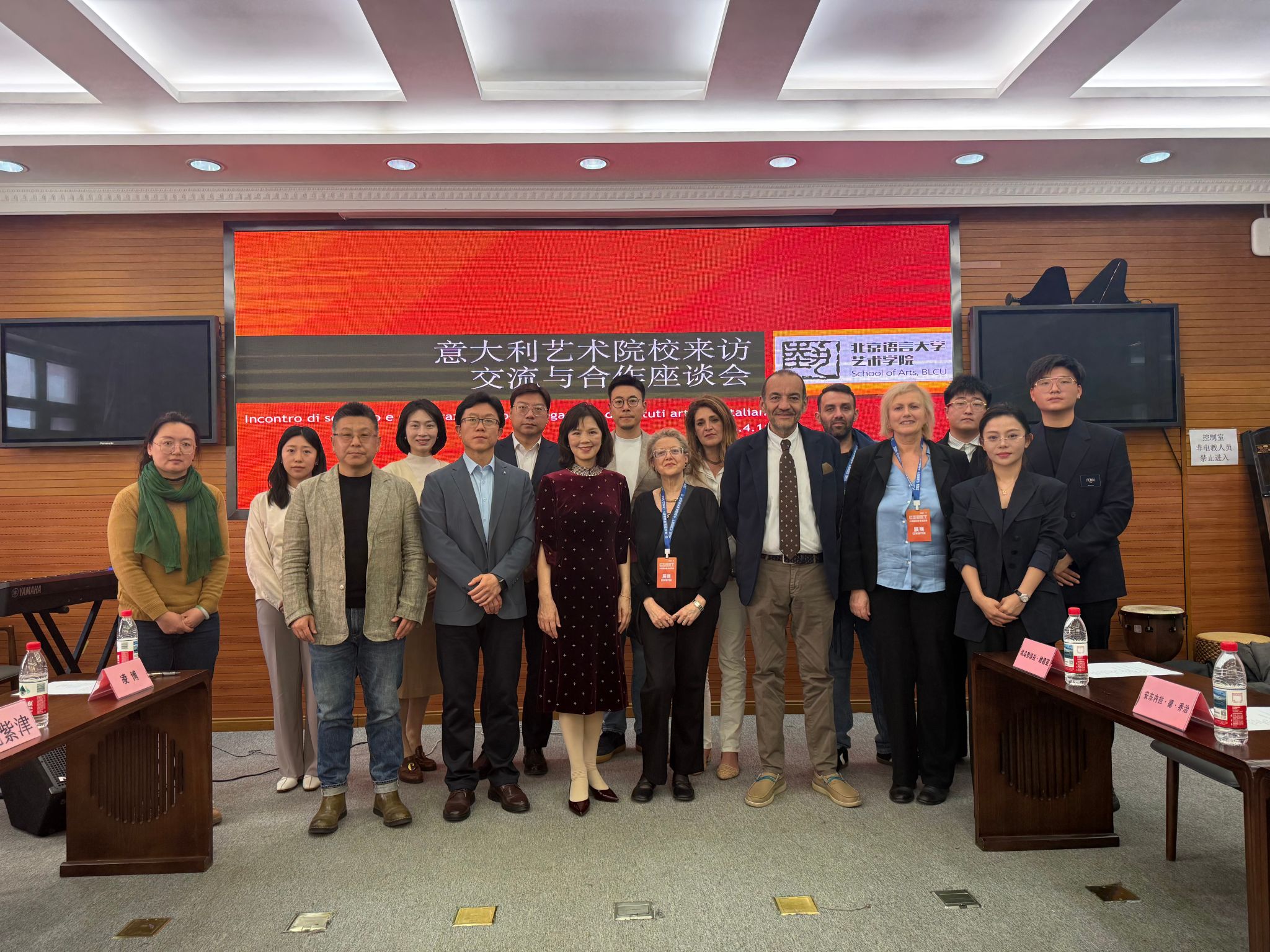
On April 11, a delegation from the Lecce Academy of Fine Arts, the Lecce “Tito Schipa” Conservatory of Music, and the Matera Conservatory of Music arrived at the BLCU School of Arts for the “Symposium on Exchange and Cooperation for Visiting Italian Art Institutions”. The meeting opened with a cultural performance by students from the School of Arts, which showcased the fusion of Chinese and Italian art while demonstrating the professional caliber of the young students. During the session, the School of Arts and the Italian representatives introduced their respective institutional characteristics, disciplinary development, and cooperation intentions, laying a firm foundation for further inter-school artistic collaboration.
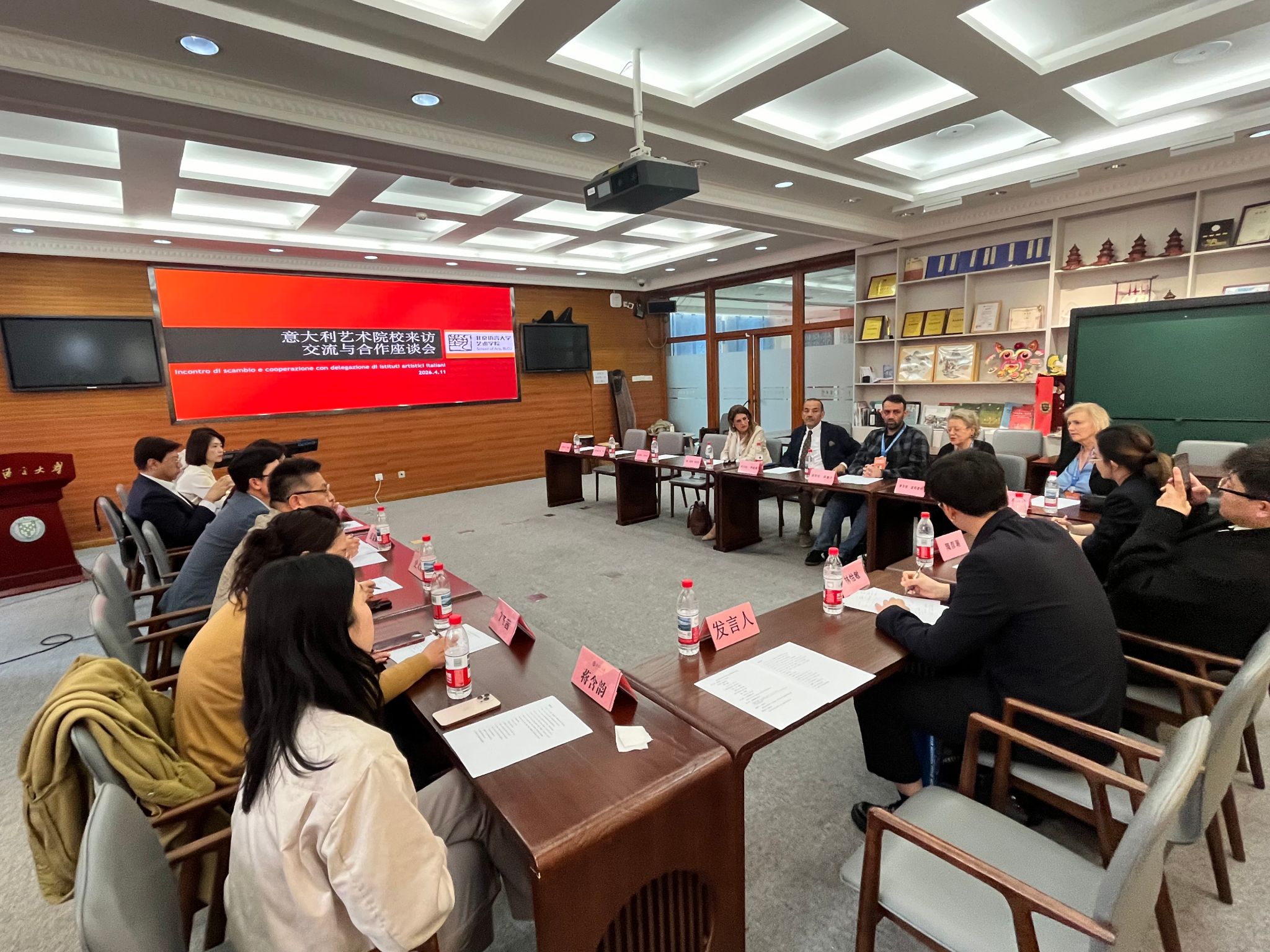
In the subsequent dialogue segment, both sides discussed art education cooperation and academic research in artistic creation. Secretary Zhang Wenqiang concluded the meeting by emphasizing that the BLCU School of Arts will continue to promote the sharing of art education resources and the joint cultivation of talent between China and Italy.
Concurrently, the “China-South Korea Music and Art Exchange Activity” was hosted by the BLCU School of Arts and co-organized by organizations including the Organizing Committee of the Korea Central International Music Competition. Dr. Cho Jae-hyoung and Cho Eun-kyoung, the General Manager of the Seoul Central International Music Competition, outlined the objectives of their visit and their vision for future cooperation. During the seminar, the two parties engaged in thorough discussions regarding eight major agenda items, including international music co-creation projects for future generations and the establishment of a Beijing division for the Korea Central International Music Competition.
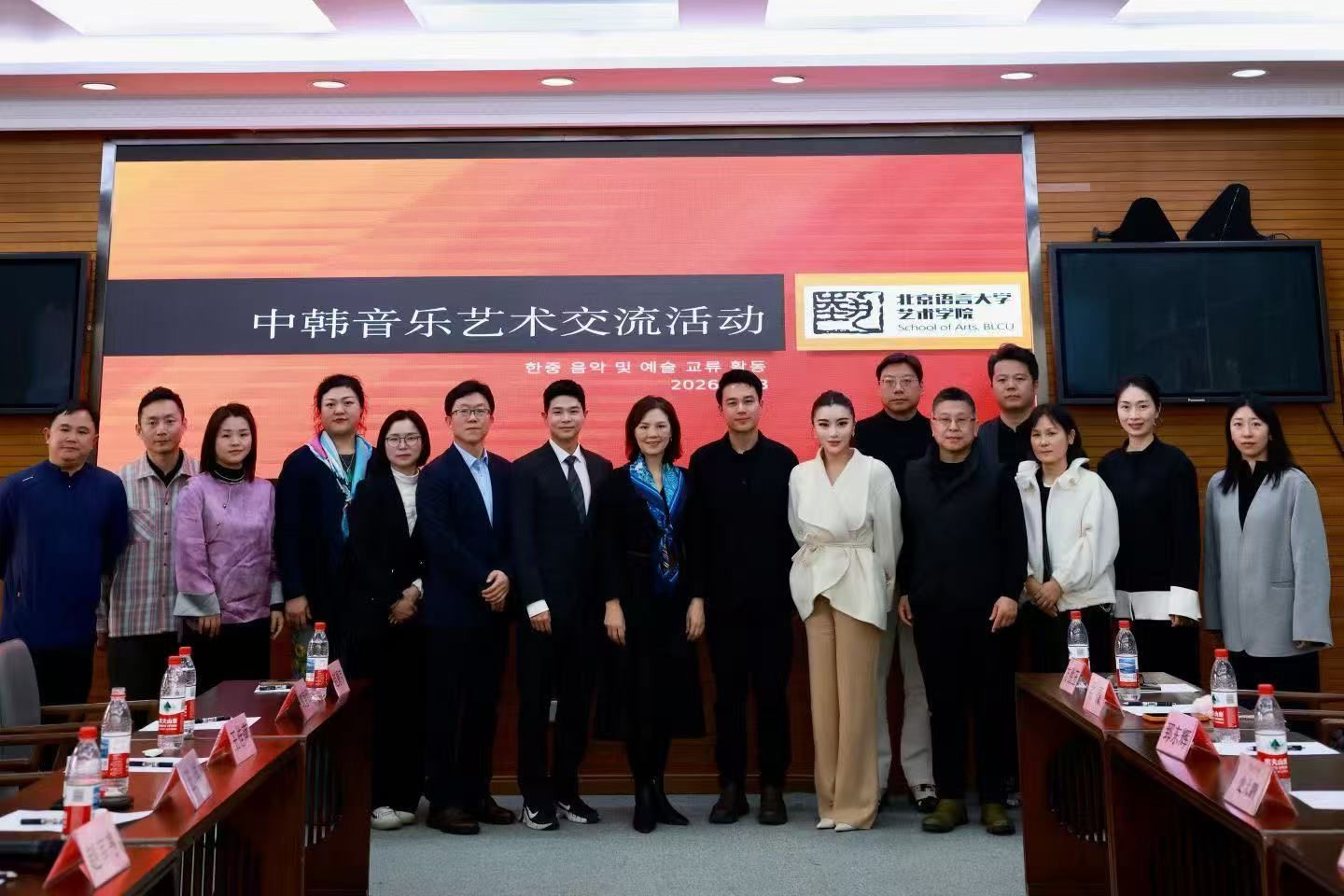
These exchange activities have not only deepened the mutual understanding and trust between the School of Arts and these international institutions but also established a solid foundation for future substantive cooperation. Moving forward, the School will continue to expand its global cooperation network and promote international dialogue and collaborative development in disciplines such as music and fine arts. By using art to effectively tell China’s story and fostering mutual learning among world civilizations, the university aims to contribute greater artistic strength toward building a community with a shared future for mankind.
(Editors: Liu Yiming, Ye Peifan, Chen Yezi)