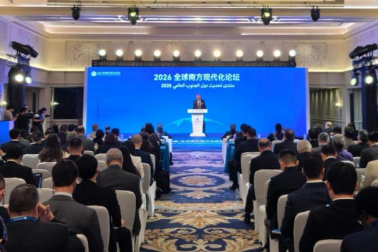
The 2026 Global South Modernization Forum was held in Cairo, Egypt, with the theme of “The Wave of Artificial Intelligence: Opportunities and Challenges for Global South Modernization”. Beijing Language and Culture University, as a co-organizer, actively participated in the event and several professors were invited to deliver speeches.
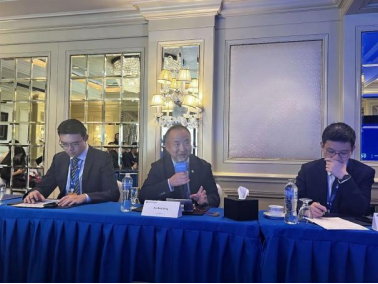
Professor Xu Baofeng, Deputy Director of the Collaborative Innovation Center for Regional and Country Studies and Dean of the College of Sinology and Chinese Studies (Belt and Road Research Institute) at BLCU stated that generative artificial intelligence is reshaping the landscape of knowledge production and cross-cultural communication. Mainstream large-language models rely on English-language corpora for training, which can easily misrepresent the indigenous languages and cultures of the Global South. He proposed that Sinology can provide support for the Global South to build a fair, inclusive, and independent digital value system. He advocated the joint development of a digital resource repository of Sinology for the Global South, aiming to build independent knowledge infrastructure for the Global South and safeguard cultural and intellectual sovereignty in the digital era.
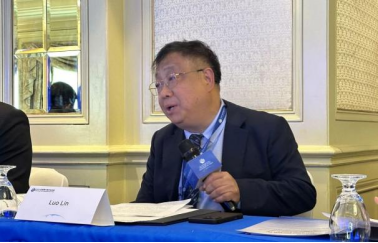
Professor Luo Lin, Executive Deputy Director of the Collaborative Innovation Center for Regional and Country Studies and Dean of the School of Foreign Languages and Cultures (Institute of Regional and Country Studies) at BLCU, pointed out that the collection and application of Arabic data brings practical challenges such as privacy, copyright, and data ownership. He proposed that the construction of Arabic datasets and language models should adhere to three principles: inclusiveness, responsible use, and digital autonomy, so as to build a more diverse global AI ecosystem.
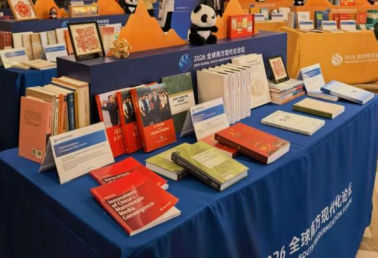
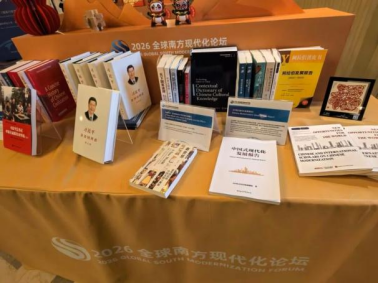
The English monograph Innovations of China’s Mainstream Media Convergence by President Duan Peng, the English edition of Contextual Dictionary of Chinese Cultural Knowledge edited by Professor Xu Baofeng, and Annual Report on Development of Arab (2022-2023) edited by Professor Luo Lin were showcased at the forum.
Moving forward, BLCU will continue to leverage its strengths to integrate language education and people-to-people cultural exchanges into the capacity-building process of the Global South. It seeks to make language a truly important bond for Global South countries to understand China, connect with one another, and jointly explore the path to modernization.
Editors: Tang Xinyue, Xu Xinyan